Vyrve: training plans for first-time triathletes, with an AI coach
Vyrve helps people train for their first triathlon with a swim, bike and run plan built around their schedule. I designed the iOS app end to end, including onboarding, the daily plan, the AI and human coaches, progress and the race community.
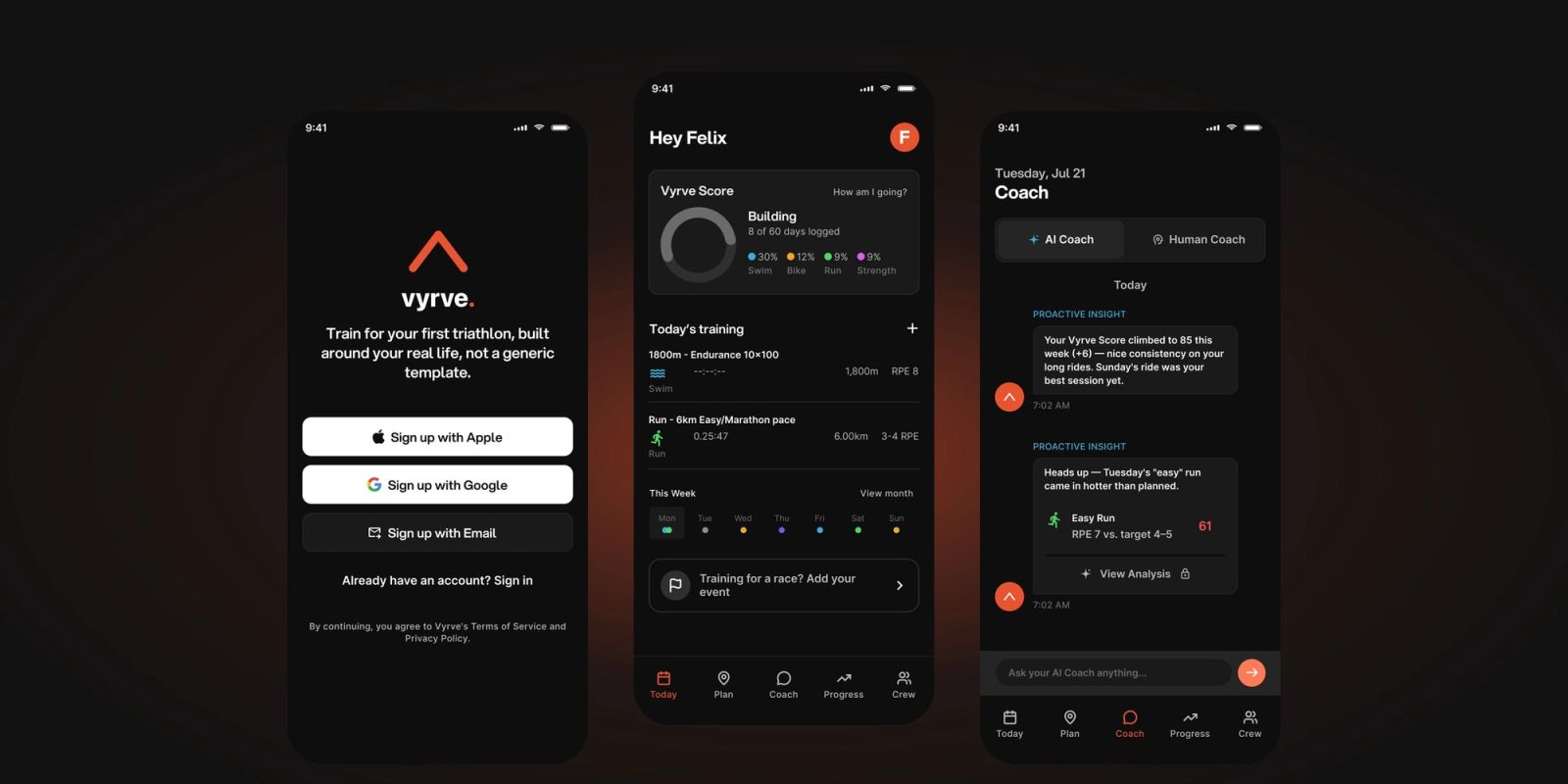
coaches in one app, AI for daily training and a person for key moments
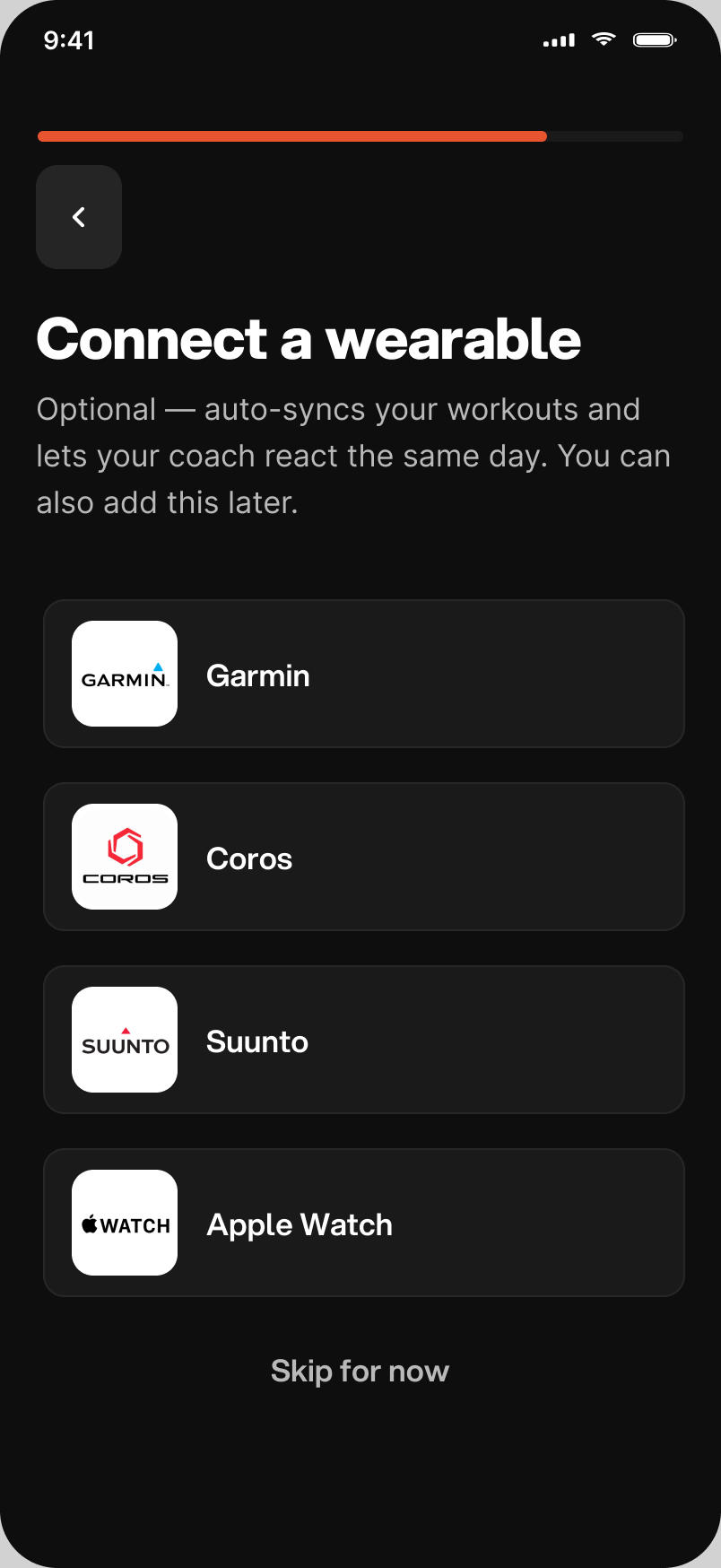
wearables supported at onboarding: Garmin, Coros, Suunto, Apple Watch
options for telling the plan what changed
TL;DR
- Problem
- First-time triathletes juggle three sports, a job and a race date. Generic plans ignore their schedule, and most training apps are written for experienced athletes, full of zones and jargon.
- What I did
- Designed a plan that adjusts when life gets in the way, an AI coach that explains every change, a human coach for the moments AI shouldn't handle alone and a community organized around each race.
- Status
- Pre-launch. The waitlist is open at vyrve.app, and results will be added after launch.
The problem
Most people training for a first triathlon download a template. It assumes they swim three times a week, have a pool and never travel, and the first missed week breaks it. Training apps add zones, thresholds and jargon written for experienced athletes.
My job was to make an adaptive plan, driven by AI, feel trustworthy to someone who has never trained for a race.
1. Onboarding
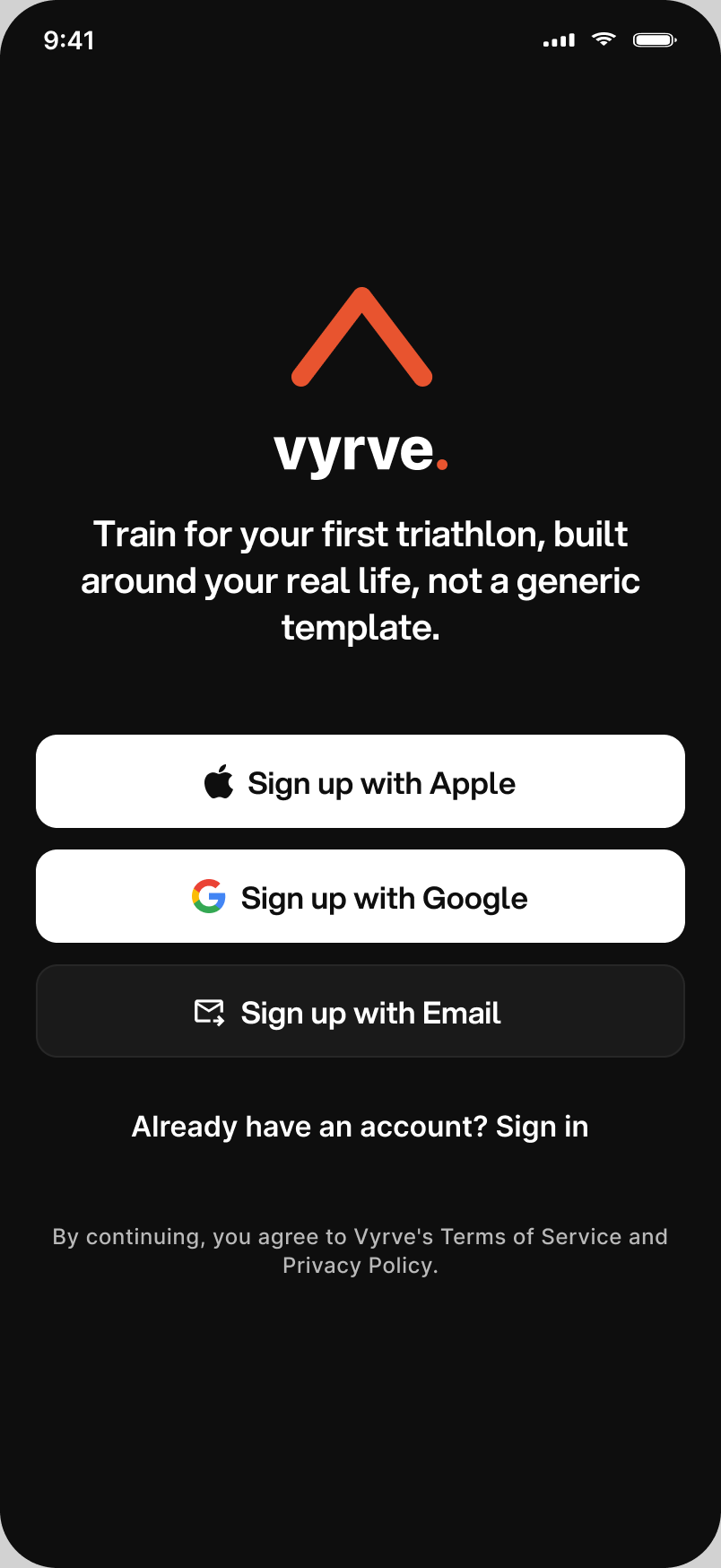
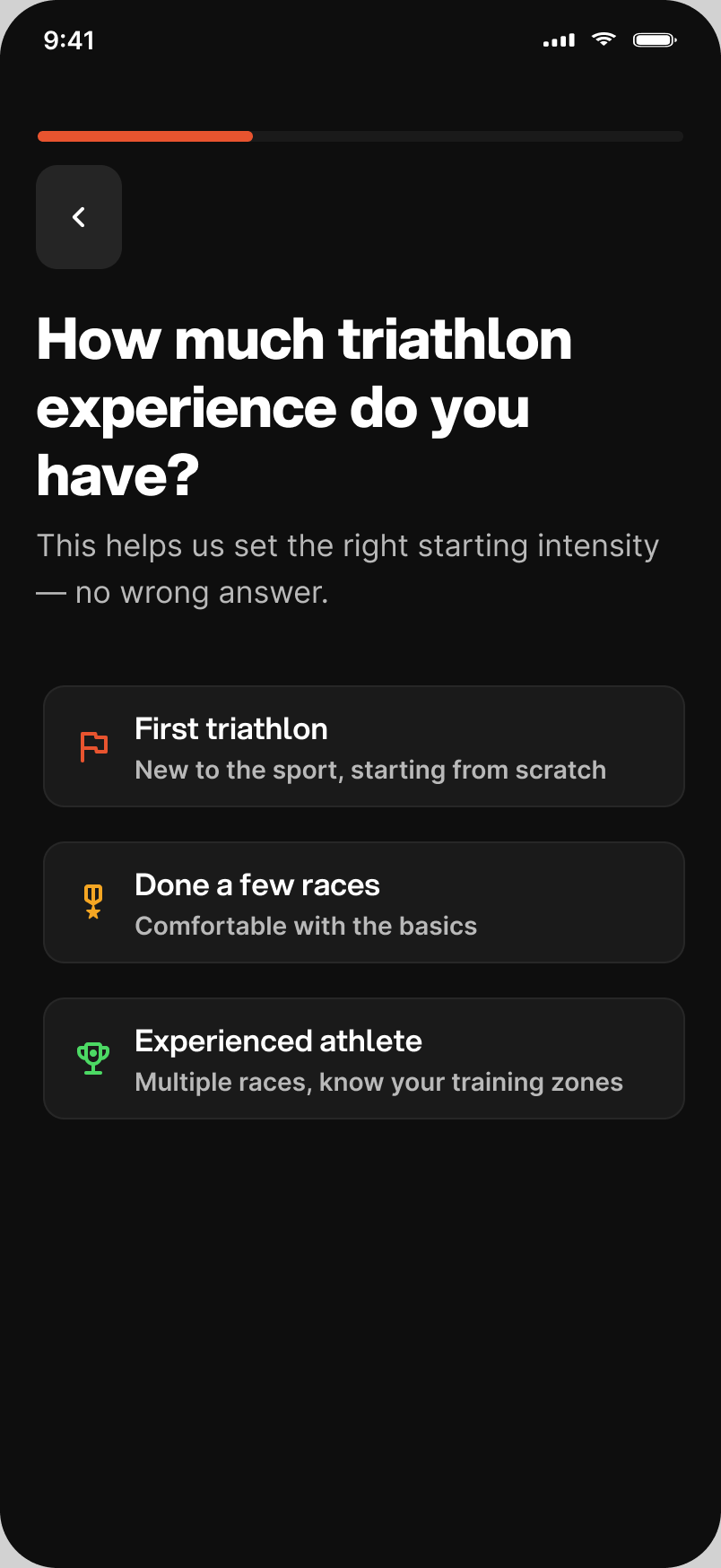
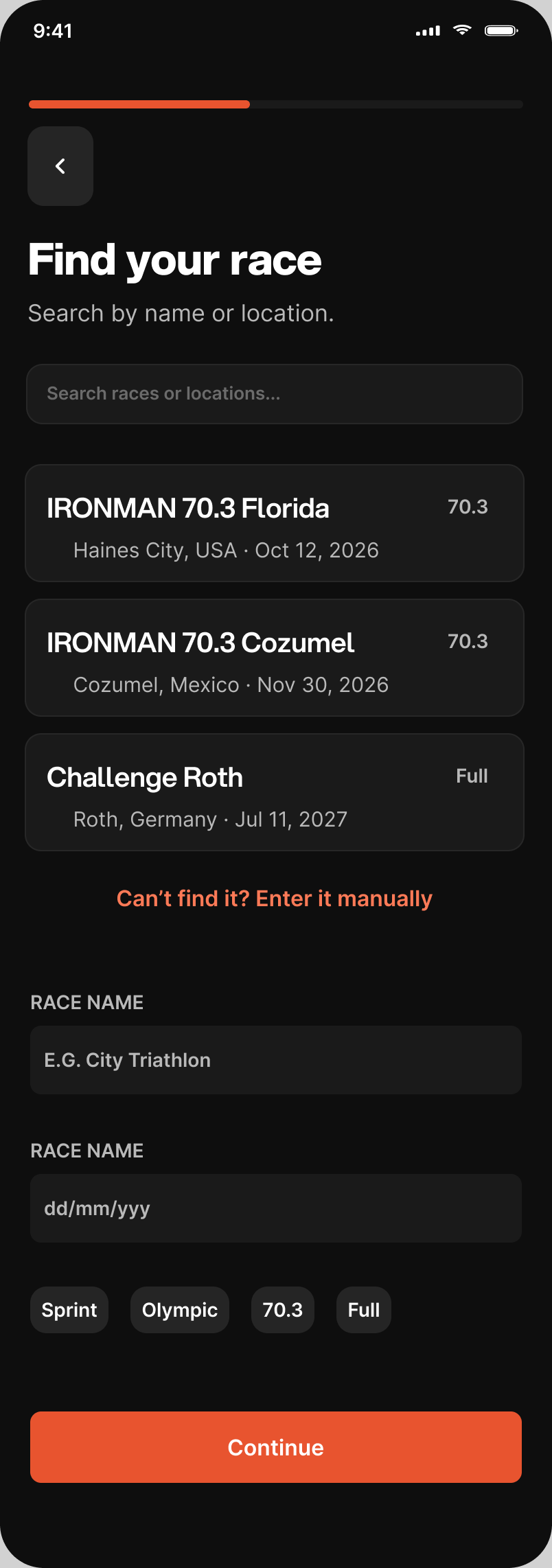
Every onboarding step feeds the plan: experience level, target race (searchable, or "Not yet" for people just building fitness), training days per week and available equipment. Connecting a wearable is optional and can be skipped. The app asks for notifications only when it can say why, "so your coach can reach you with insights."
2. Today
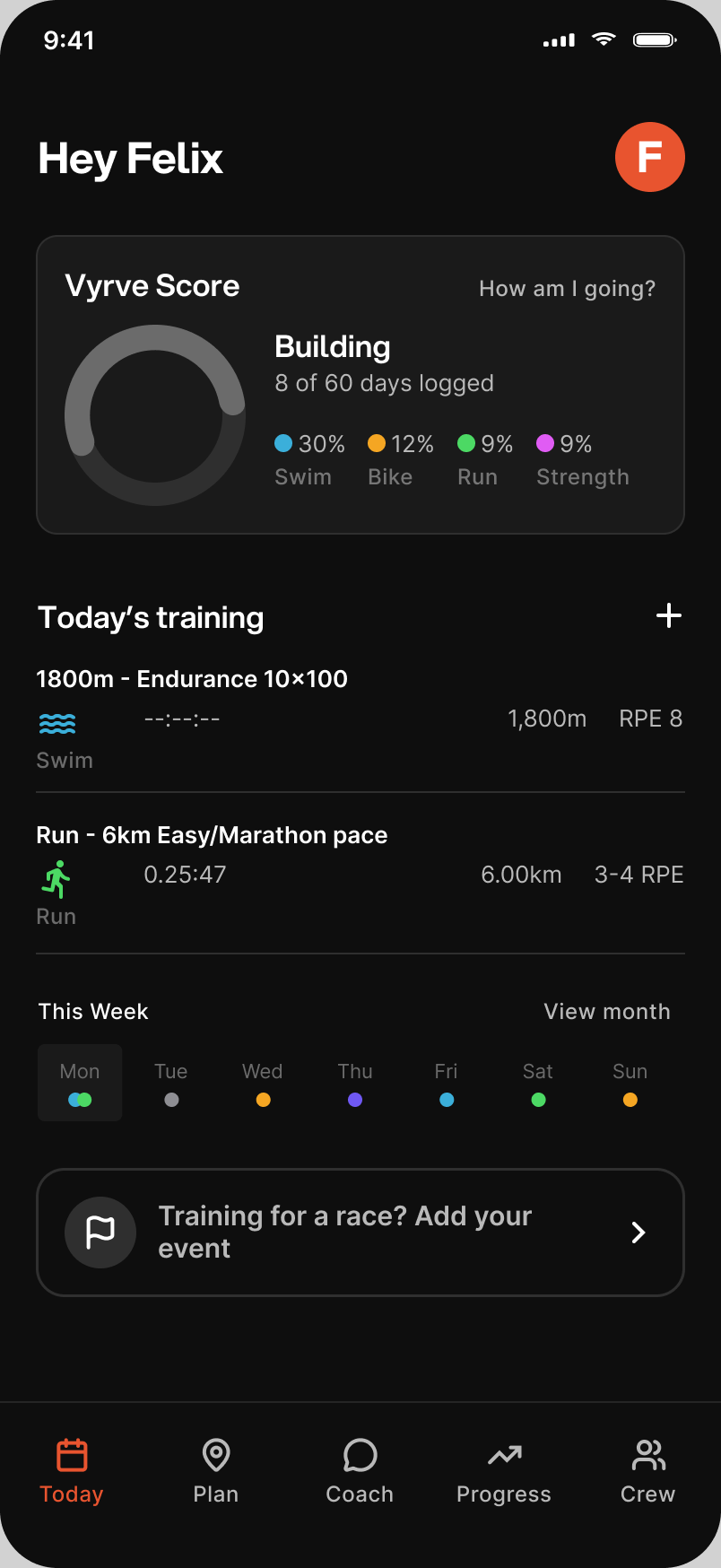
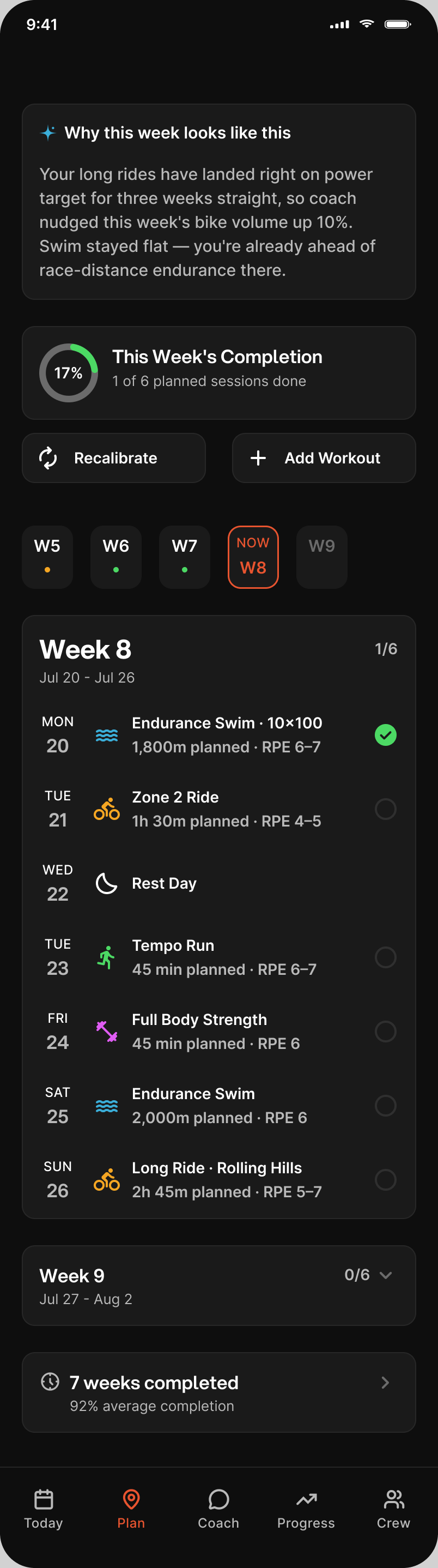
The Today screen starts with what to do now. Each session lists distance, time and effort in RPE, so a beginner without a power meter or heart-rate strap can follow it. The Vyrve Score tracks consistency across swim, bike, run and strength and is labeled in plain language ("Building · 8 of 60 days logged").
Effort in RPE, explained once
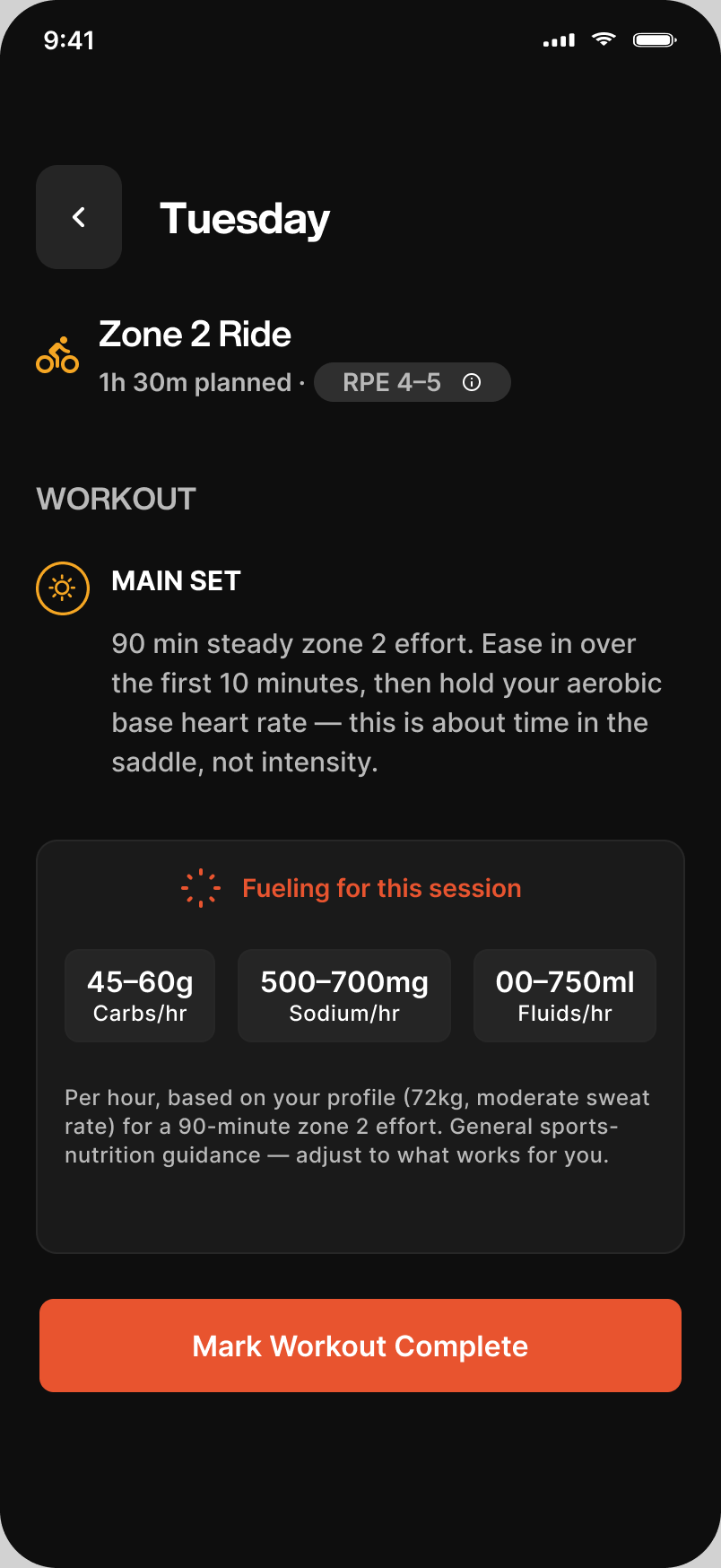
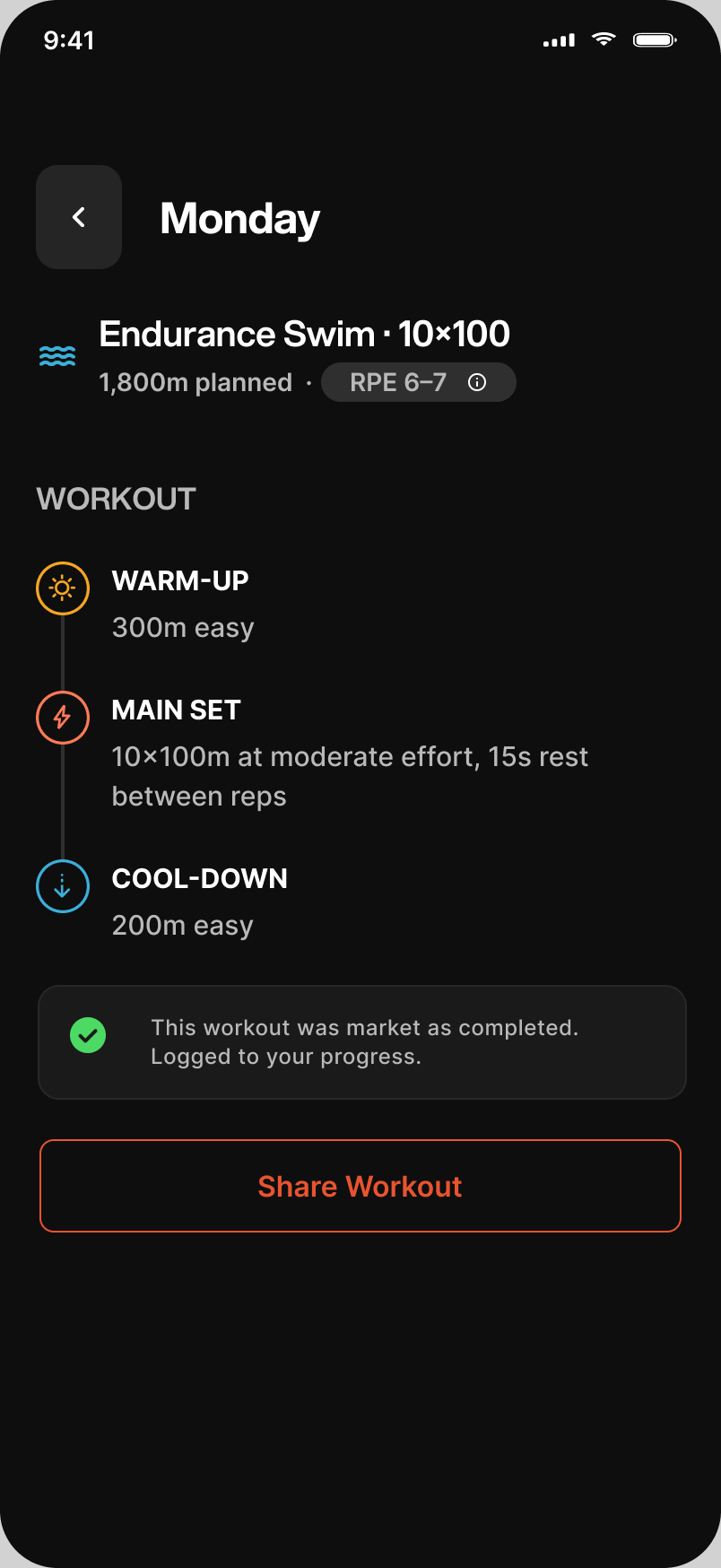
Every workout uses a 1-10 perceived effort scale with a short "What is RPE?" explainer, so the plan works with nothing more than a watch. Workouts are split into warm-up, main set and cool-down. Fueling guidance per hour comes from the athlete's profile, with a note saying it isn't medical advice.
3. The AI coach
Explaining plan changes
When the plan changes, the reason appears at the top of the week. For example, "Your long rides have landed right on power target for three weeks straight, so coach nudged this week's bike volume up 10%. Swim stayed flat — you're already ahead of race-distance endurance there."
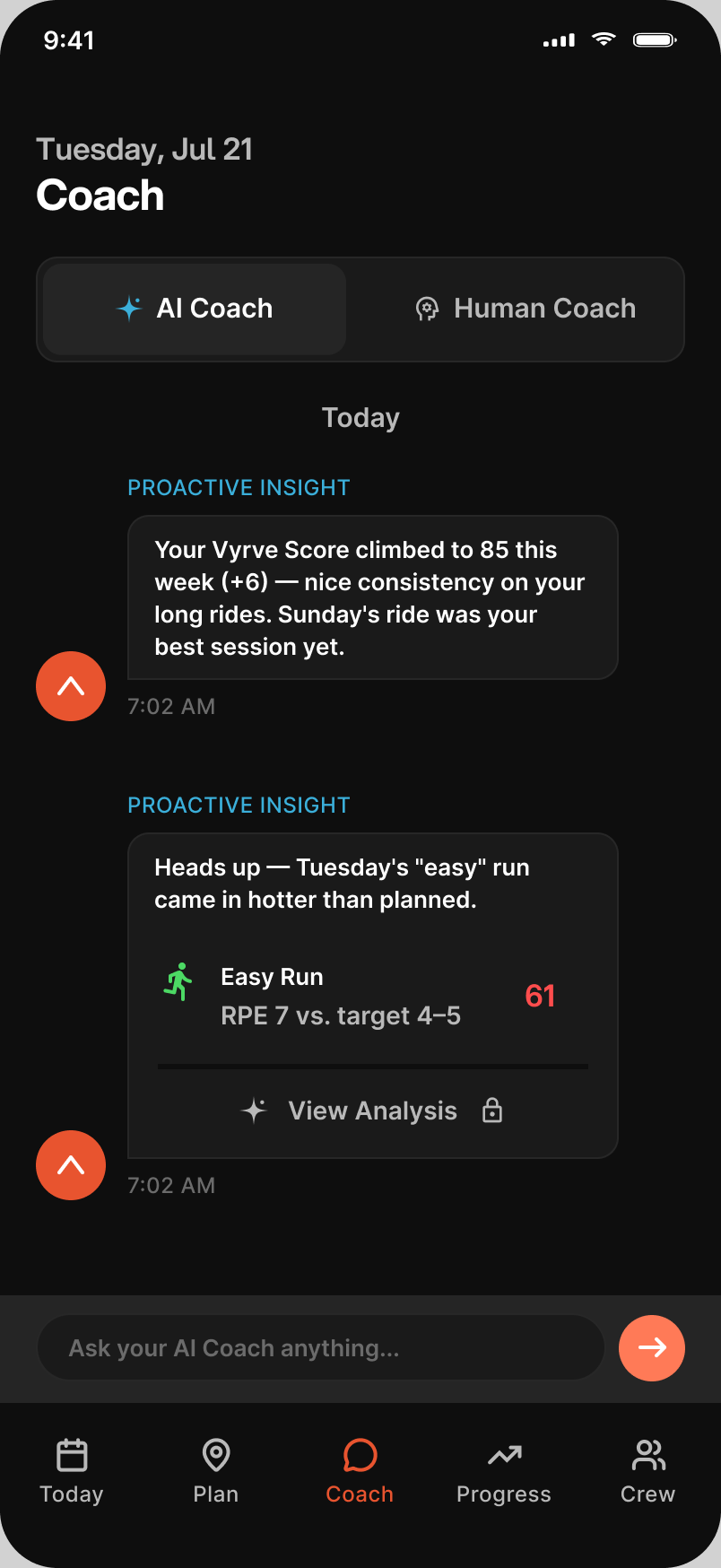
The AI coach also sends messages without being asked. It reports progress ("Your Vyrve Score climbed to 85 this week") and flags problems early ("Tuesday's 'easy' run came in hotter than planned: RPE 7 vs. target 4–5"), with a deeper analysis one tap away.
Recalibrate, don't restart
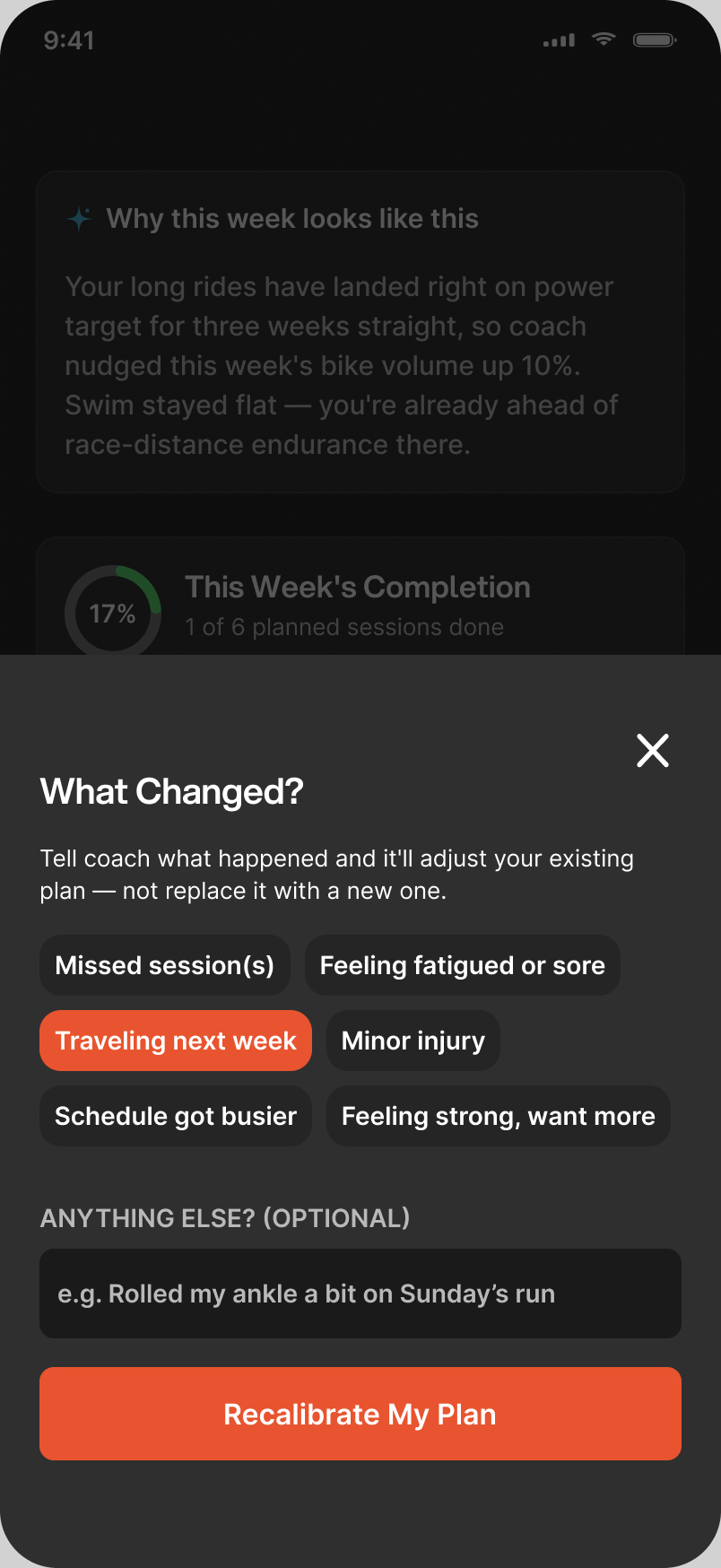
When training goes off track, athletes tell the coach what changed (missed sessions, fatigue, travel, a minor injury, a busier schedule or feeling strong) and can add context in their own words. The coach adjusts the existing plan and keeps the progress already made.
4. Human coach
Messaging or booking a coach
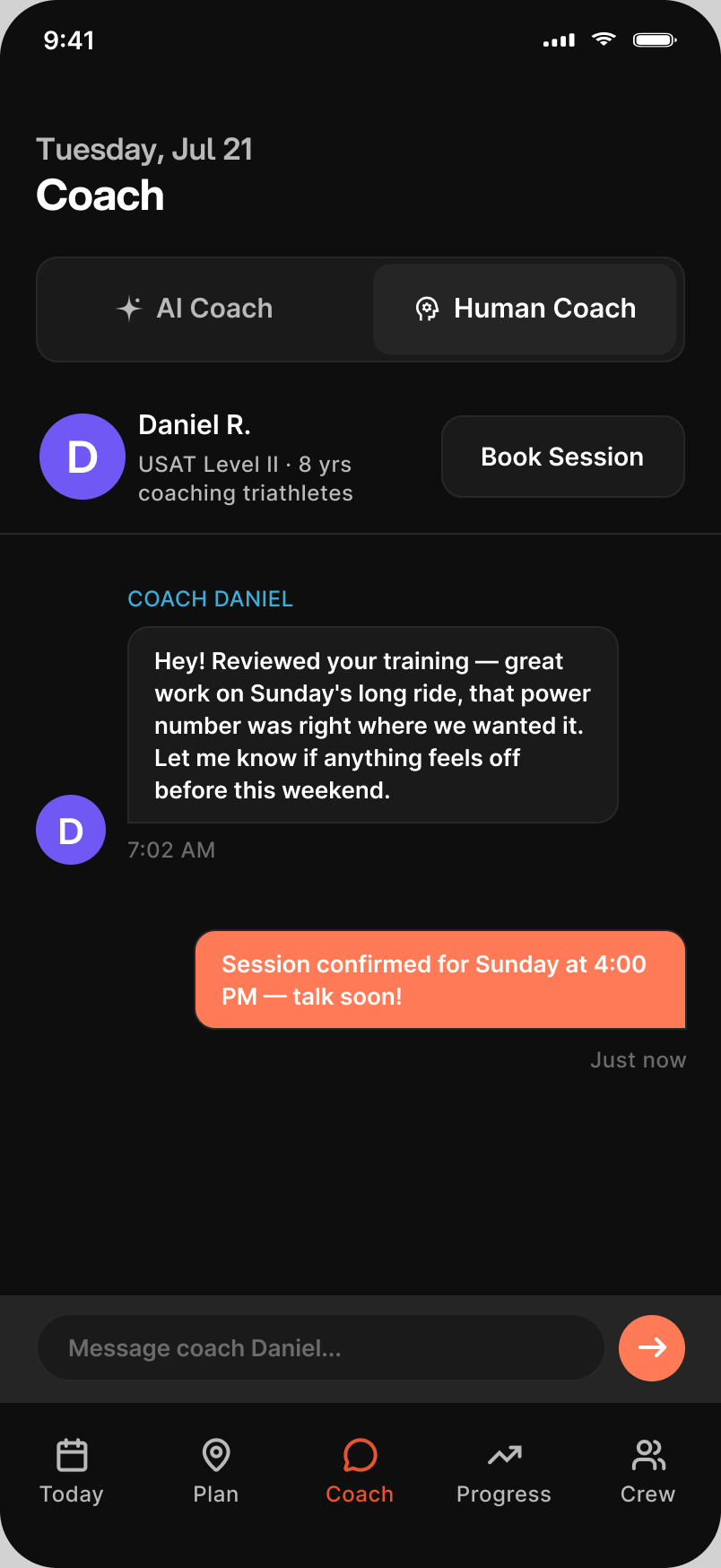
Next to the AI coach there's a certified human coach the athlete can message or book for a 15-minute session. The app tells athletes the coach "will already know your training history — no need to catch him up." The AI handles the daily adjustments, and the human coach covers judgment calls and motivation.

5. Race crew
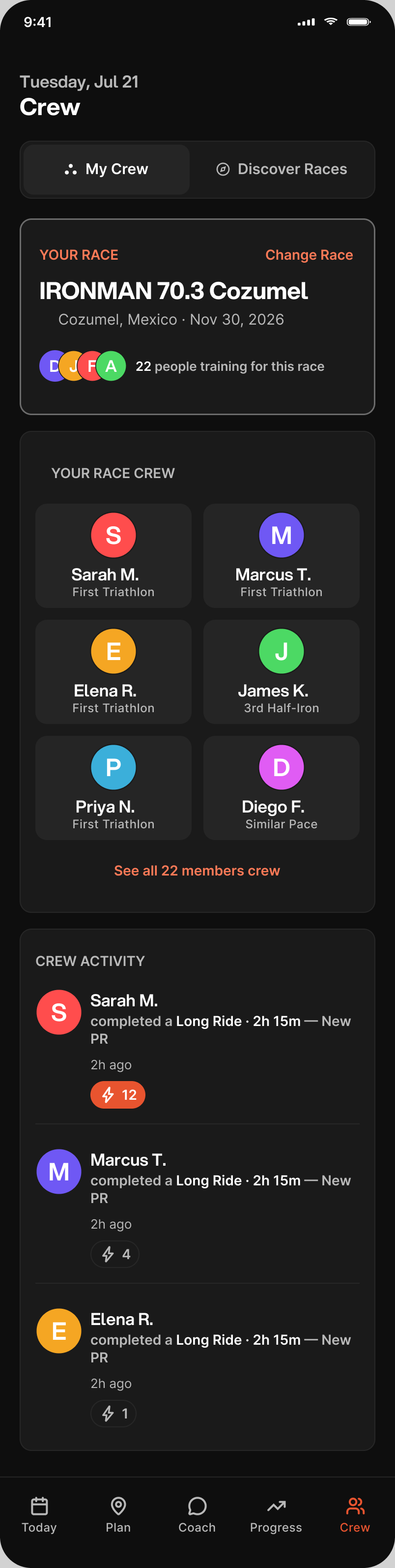
The community is organized around the athlete's race. It shows the people training for the same event, tagged by experience ("First Triathlon," "3rd Half-Iron," "Similar Pace"), and their recent sessions. Athletes appear to their crew with first name and country only.
6. Premium
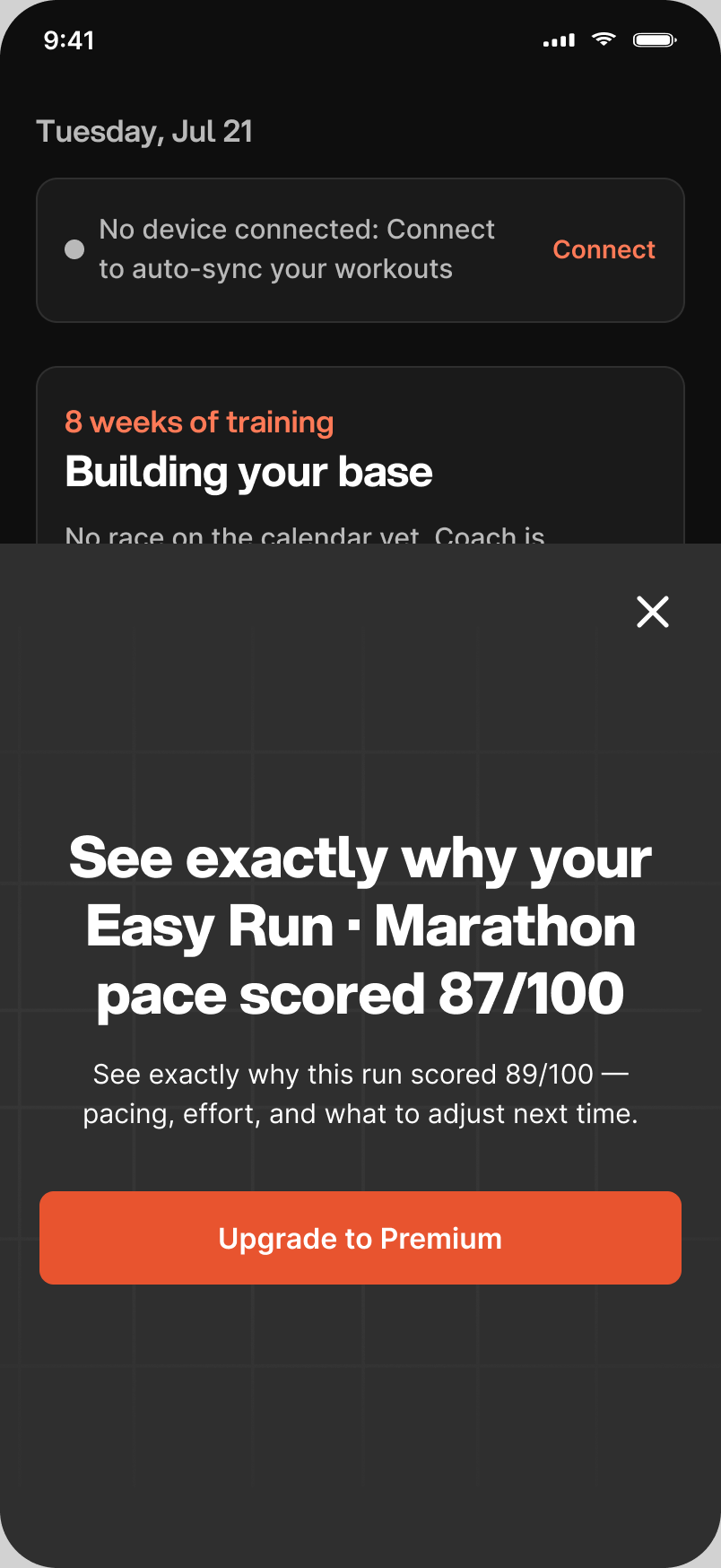
The free plan includes training and the AI coach. Premium adds deeper workout analysis, unlimited coach conversations and the human coach. The upgrade offer appears when an athlete asks for more, for example when they tap to see why a run got its score. There's no paywall during onboarding.
How I worked
Vyrve was a client project. I worked directly with the founder, and we tested the flows with people from the founder's circle before opening the waitlist.